
What is the Safe Routes to School Program (SRTS)?
Our vision for Harrisonburg Safe Routes to School is to create equitable and sustainable programs that support, encourage, and increase safe active transportation among K–12 students. We work to create safer streets and school campuses, promote safe behaviors among pedestrians, bicyclists, and motorists, and foster a culture that values active transportation as a healthy and accessible way to travel.
The program is coordinated by Andrea Troyer, the Safe Routes to School Coordinator, who leads and supports a wide range of activities in partnership with schools and community groups. These efforts include student education, school-day walking and biking initiatives, infrastructure planning, and community outreach, all aimed at making it safer and more desirable for students to walk or bike as part of their daily routine.
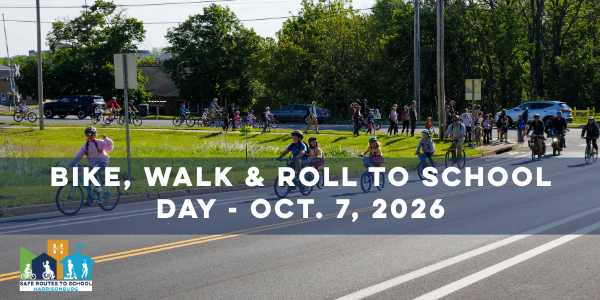 Join SRTS for Harrisonburg’s Bike, Walk, & Roll to School Day on Wednesday October 7, 2026, a fun and active way for students to get to school safely while building healthy habits! As part of Harrisonburg’s Safe Routes to School Program, we’re encouraging families and students to bike, walk, or roll together and experience the joy of alternative ways to travel to school as a community.
View the event webpage for the October event.
- Recommended Routes for Biking and Walking to School
Safe Routes to School Maps
The City of Harrisonburg has created a set of maps to identify recommended biking and walking routes for students. These routes are chosen based on safety and accessibility. A “safe route” includes features like crosswalks, sidewalks, bike lanes, and traffic-calming elements, along with education programs to teach safe behaviors.
Recommended Routes for Biking and Walking to School webpage
Additional City Maps
- SRTS Program Goals and Outcomes
Equitable and Sustainable Programming: Establish a Safe Routes to School program grounded in meaningful community involvement, equitable access, and sustained resources.
- Safe Routes to School programs, information, and opportunities are accessible to students and families across Harrisonburg, with attention to differing needs among schools and neighborhoods.
- Students, families, schools, and community partners understand how Safe Routes to School decisions are made and have meaningful opportunities to help shape priorities and actions.
- Schools, City staff, and community partners collaborate regularly to support Safe Routes to School planning, implementation, and evaluation.
Safe Streets: Create safer school-area streets and networks through infrastructure improvements, better arrival and dismissal operations, and targeted traffic enforcement so students can walk, bike, and roll to school more safely and comfortably.
- School routes and school-area streets are improved to better support safe walking, biking, and rolling.
- On-campus infrastructure, as well as arrival and dismissal procedures, better support safe and orderly travel for all modes, including students walking, biking, and rolling.
- Traffic laws and school-zone expectations are standardized and more consistently followed near schools.
Safe & Healthy Behaviors: Support safe student travel by providing education, hands-on practice, and access to the equipment and supplies that help students walk, bike, and roll more safely.
- Students and families build the knowledge, skills, and confidence needed to walk, bike, and roll safely and make active transportation part of daily routines.
- Safe practices are encouraged and reinforced by schools, families, and the broader community.
- Schools, families, and community partners encourage habits that support both student safety and regular physical activity.
Supporting Culture: Build a community culture that encourages and values walking, biking, and rolling to school through stronger community connections, visible events and activities, and the normalization of active transportation as part of everyday life.
- Students, families, schools, and community partners are connected through shared efforts that support active transportation to school.
- School- and community-based events create visible and positive opportunities for students and families to participate in active transportation.
- Walking, biking, and rolling to school are increasingly seen as normal, supported, and valued ways for students to travel.
- Bike, Walk & Roll to School Day
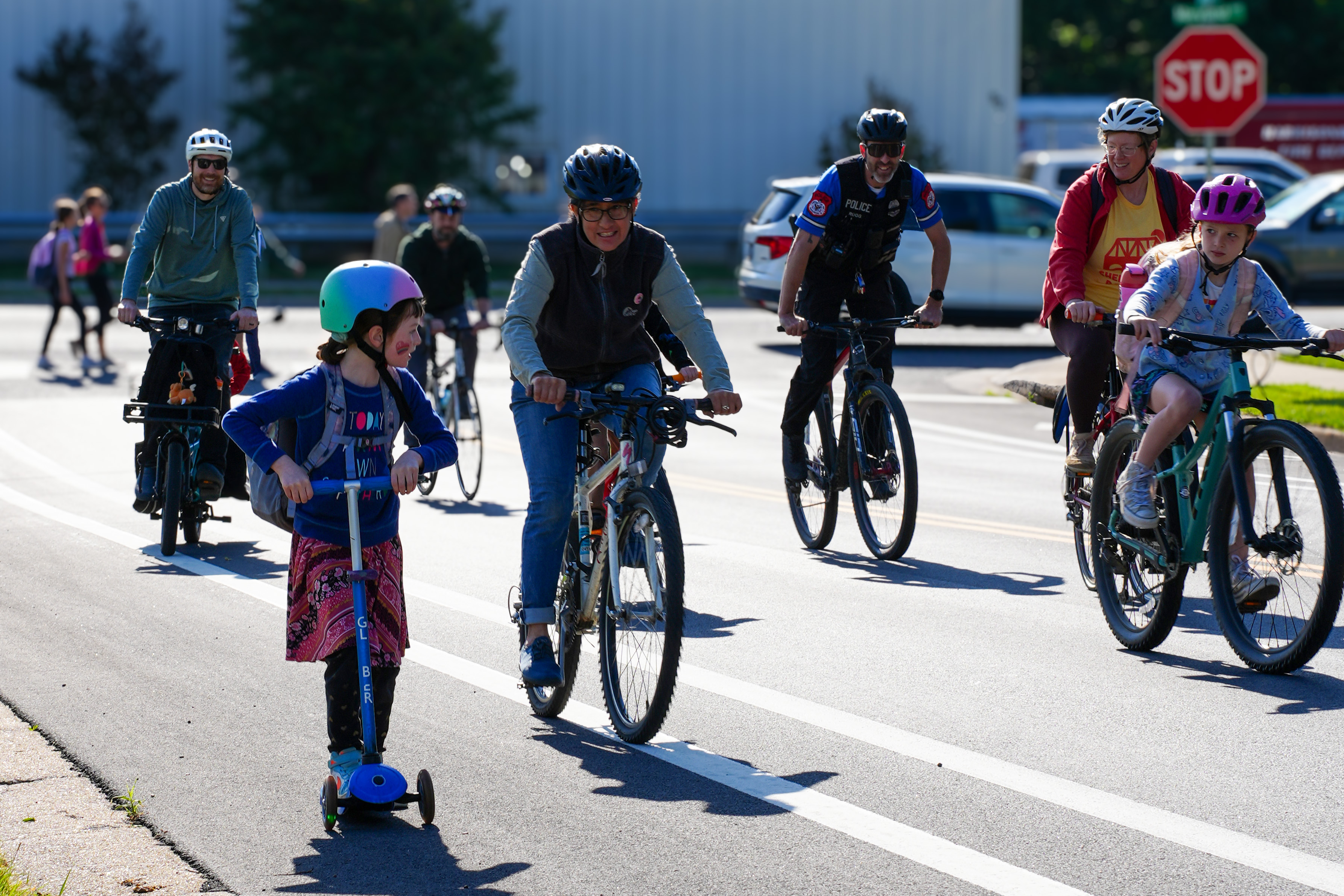
Every May and October, join SRTS for Harrisonburg’s Bike, Walk, & Roll to School Day, a fun and active way for students to get to school safely while building healthy habits! As part of Harrisonburg’s Safe Routes to School Program, we’re encouraging families and students to bike, walk, or roll together and experience the joy of alternative ways to travel to school as a community.
View the event webpage for the October event. Stay tuned for more details about Bike, Walk and Roll to School Day on October 7, 2026.
- Walking School Buses and Bike Buses
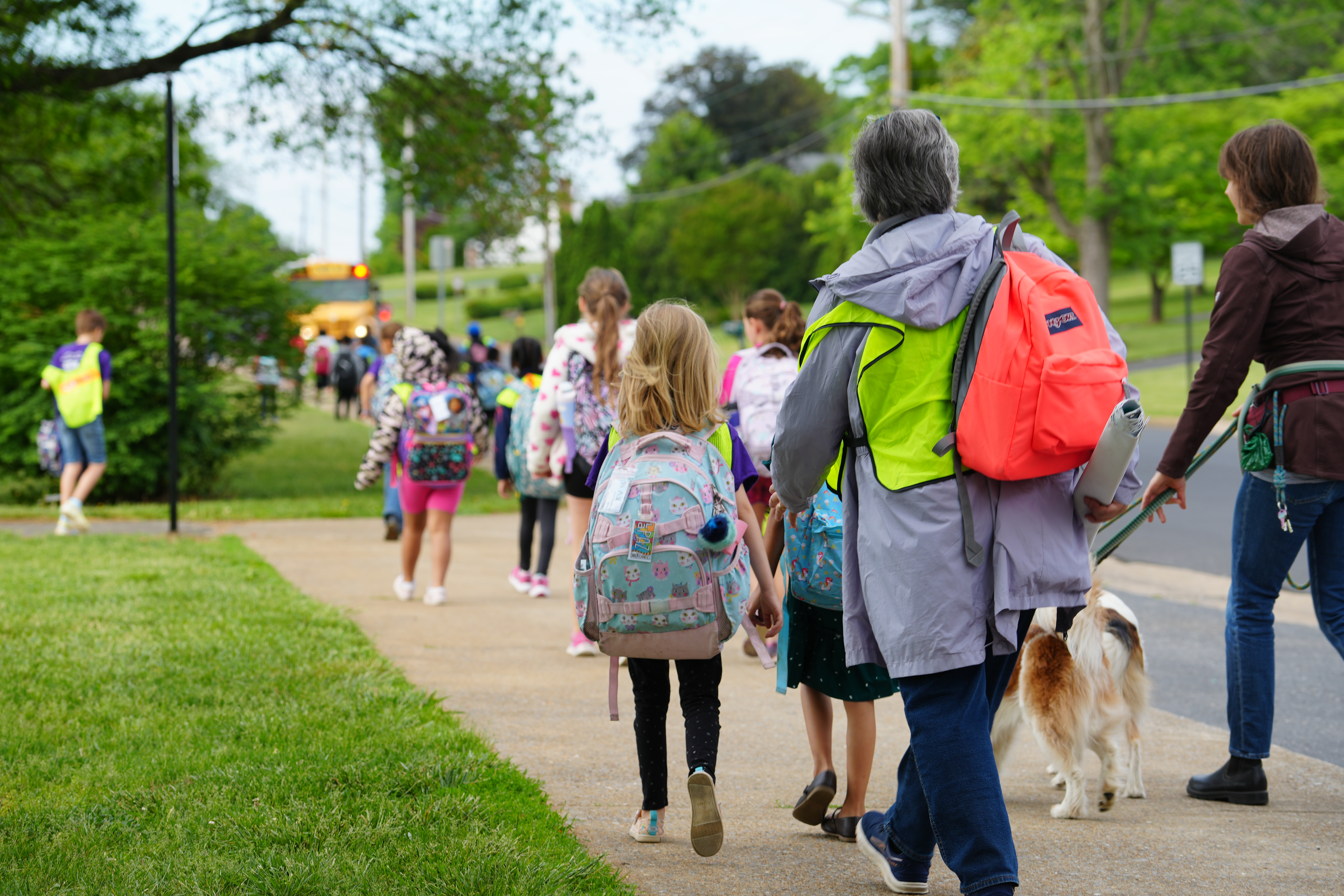
What are Walking School Buses and Bike Buses?
A walking school bus or a bike bus is a group of children walking or biking to school with adult supervision, a set route, designated areas, and a pick-up time to join along the way. Frequency and communication are based on the specific school or neighborhood group and the availability of leaders.
How does it work?
- Scheduled Routes: The group will follow a designated route with specific stops where children can join and will walk or bike together to school.
- Adult Supervision: Volunteer route leaders (parents/guardians of HCPS students, City/School staff, community members) will join to ensure safety and provide guidance. Community volunteers who are not HCPS parents should complete an HCPS background check before serving as leaders. Contact the SRTS Coordinator if you are interested in becoming a leader.
- Safety First:
- All students biking must wear a properly‑fitted helmet.
- Follow the leader’s directions, traffic laws, and safe‑riding/walking practices.
- Bikes should have working brakes; use front white and rear red lights and reflectors for low‑light conditions.
How does my child participate?
- Students: Depending on your school, sign-up may be required to participate. Signing up is encouraged so leaders know who to expect and how to contact families for updates or cancellations. SRTS is piloting morning walking school bus and bike bus routes only. Check with your school’s policy related to dismissing students to walk/bike home independently.
- Student sign up: https://arcg.is/0ifKae3
- Routes leaders will communicate with the group if there are cancellations related to inclement weather. Please sign up so the route leaders can contact you for updates and cancellations.
Liability and Expectations
- Participation is voluntary. By allowing your child to participate, you acknowledge the inherent risks of walking and bicycling (e.g., falls or collisions) and agree that parents/guardians always remain responsible for their child.
- You agree not to hold the school, Safe Routes to School (SRTS), route organizers, or volunteers responsible for any injury, accident, or property damage that may occur during participation. Parents/guardians always remain responsible for their child, including any injuries, damage, or costs arising from their child’s participation. Participation is voluntary and may be discontinued at any time.
Safe Routes Leaders
- Who can lead: HCPS parents/guardians, City/School staff, and community members (with approved background check if not an HCPS parent).
- What leaders do: Keep time, take attendance, model safe walking/biking, communicate changes, and report incidents.
- Interested in leading? Sign up to meet with the SRTS Coordinator: https://arcg.is/0uOT9r0
How to Start a Walking School Bus or Bike Bus:
- Sign up for the Safe Routes to School email list to learn more, get involved, and receive information about upcoming events and opportunities.
- Engage in PTO: Add your email to a group related to Safe Routes to School for ways to engage in your neighborhood or school. A “bus” can be just a few students!
- Become a Volunteer: Help coordinate a route, frequency, and a registration list of participants. Contact the Safe Routes to School Coordinator if you have any questions or are interested!
Contact Andrea.Troyer@harrisonburgva.org for any questions to receive additional information about Walking School Buses and Bike Buses in Spanish, Arabic, or Kurdish.
- Benefits to Walking, Biking & Rolling to School
- Improves Safety and Builds Confidence - Walking or biking in a group or with an adult helps kids feel safe on the way to school. As they gain experience, they learn important skills like how to cross streets, follow traffic signals, and stay alert, which builds confidence and independence.
- Encourages a Healthier Lifestyle - Walking and biking are great ways for kids to get daily exercise. Staying active helps improve their overall health, including heart health and muscle strength, and supports lifelong healthy habits.
- Boosts Academic Performance - Active kids tend to be more focused and alert at school. Regular physical activity supports brain function, which can lead to better attention, memory, and problem-solving in the classroom.
- Strengthens Community Connections - Traveling to school on foot or by bike helps build stronger ties between families and neighbors. Shared routines create chances for kids (and parents) to make friends and feel more connected to their school community.
- Reduces Traffic Around Schools - Fewer cars during drop-off and pickup times means less congestion and safer streets for everyone walking or biking near the school.
- Safety Information & Resources
The Federal Highway Administration (FHWA) produced three bicycle safety education videos and three pedestrian safety education videos for different age groups of children (ages 5-9, ages 10-14, and ages 15-18). Available in English and Spanish.
- Bicycle Safer Journey (English)
- Bicycle Safer Journey (Spanish)
- Pedestrian Safer Journey (English)
- Pedestrian Safer Journey (Spanish)
Supporting Organization Resources